
Firm operations
Monthly Client Reporting That Justifies the Retainer: What to Send and When
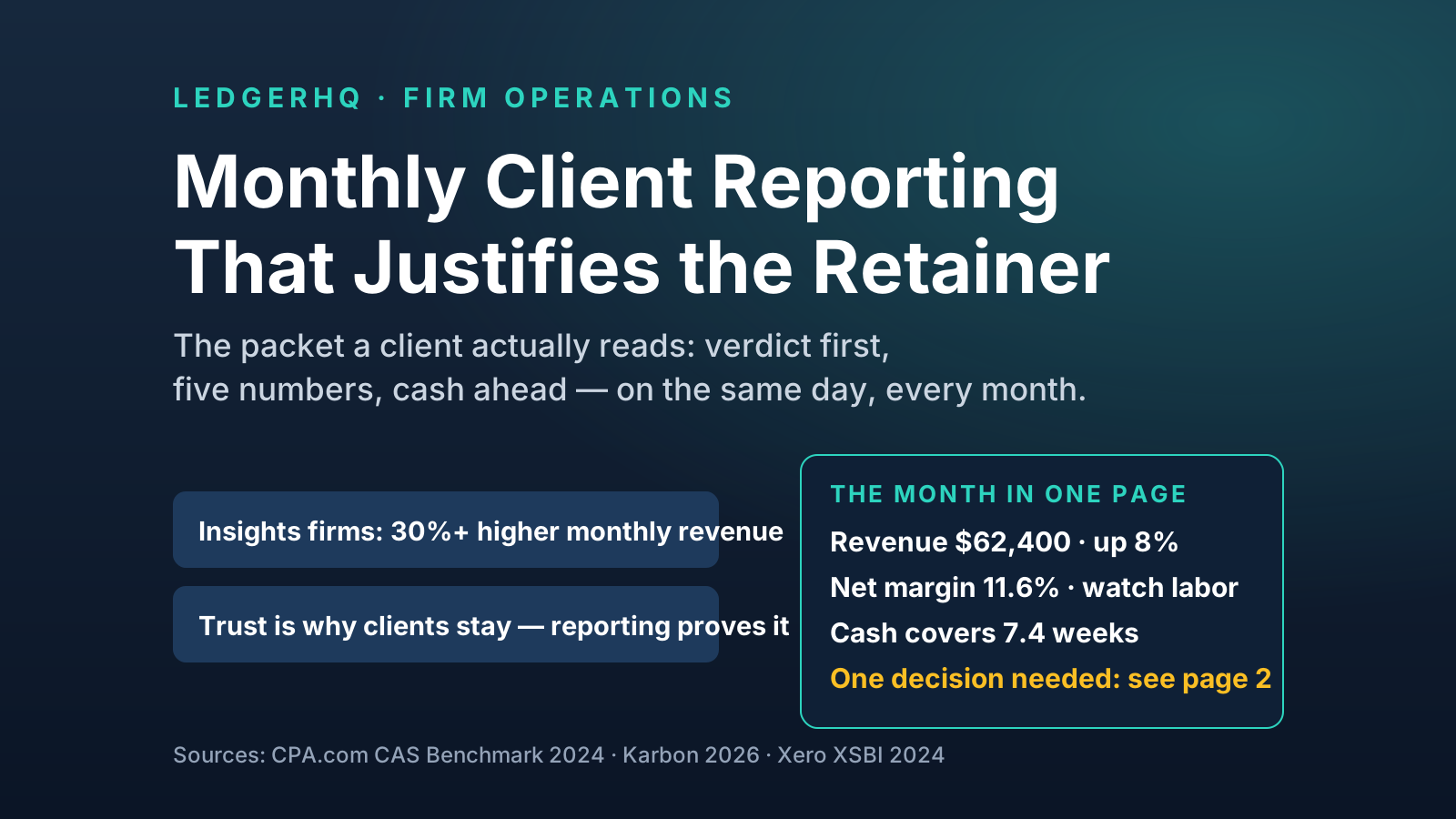
A retainer is renewed on what the client can see. The monthly packet — verdict page, five numbers, cash lookahead, one decision — that turns finished books into visible value, with the cadence, worked examples, and tier structure to run it.
The short answer
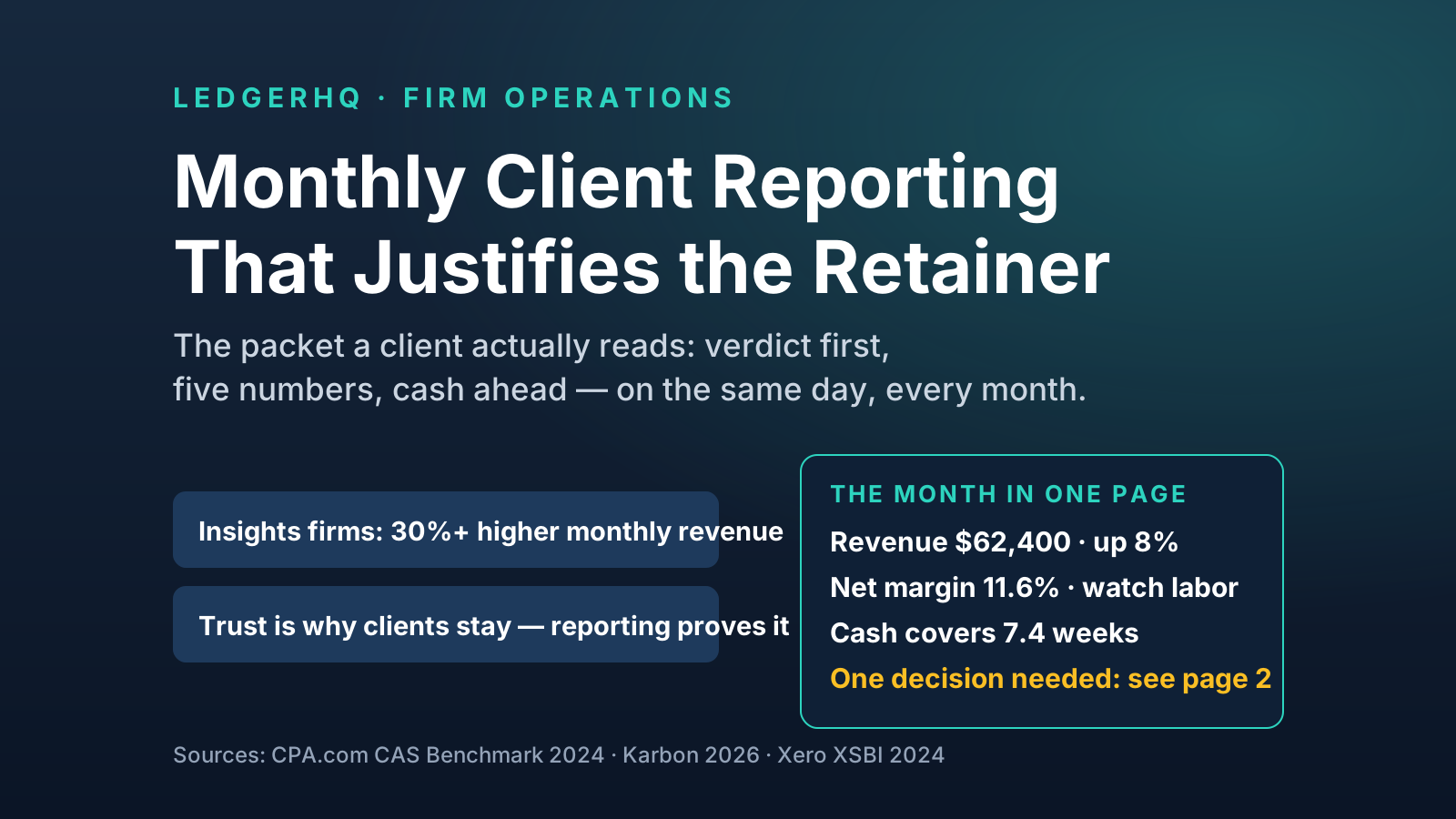
Your client does not experience your bookkeeping. They experience a bank balance, a payroll they made, and — once a month, if you send it — a report. Everything you actually did all month, the coding, the reconciliations, the chased-down receipts, is invisible unless the reporting makes it visible. That is why the monthly packet is not an administrative extra bolted onto the retainer. In the client's mind, the packet is the retainer.
A packet that justifies its price has a specific shape. It opens with a verdict, not a statement: one page that says how the month went in plain words and names the one thing that needs the client's decision. It shows five numbers the client learns to follow — revenue, gross margin, net margin, cash, and how many days customers take to pay — each compared with last month and the same month last year. It looks forward at cash before it looks backward at profit, because cash is what keeps a business alive. It arrives on the same day every month, because a report that lands on the 6th ten months in a row is a promise kept, and promises kept are what clients actually renew. And it ends with actions: what you did, what you need from the client, and by when.
The evidence says this layer is where the money is. In the 2024 CPA.com and AICPA PCPS Client Advisory Services Benchmark Survey, firms that generated significant revenue from CFO and higher-level business-insights services earned more than 30 percent higher monthly recurring revenue than the rest — while the typical client accounting engagement was already priced at a median of about $3,000 a month. Clients are not paying that premium for faster transaction coding. They are paying to understand their business monthly, from someone they trust. This article is the operating manual for the deliverable that earns it: what goes in the packet, in what order, on what day, at what depth for each package tier, and how to produce it without the packet eating the margin it is supposed to defend.
Why statements alone do not justify anything
Most firms already "report." They close the month and send the income statement and balance sheet, sometimes with a one-line email: here are your financials, let me know if you have questions. Then they wonder why the client treats the retainer as a commodity and shops it every January.
Three problems sink that approach.
The statements answer questions the client is not asking. An owner does not wake up wondering about accrued expenses. They wonder whether they can afford the second truck, why the bank balance feels low when sales were good, and whether the new hire is paying for themselves. A raw statement contains the raw material for those answers and delivers none of them. The translation — this line moved, here is why, here is what it means for next month — is the valuable part, and it is exactly the part a statement dump skips.
There is no comparison, so there is no story. A single month's numbers in isolation are nearly meaningless to a non-accountant. Revenue of $62,400 is good or bad only against last month, the same month last year, and the goal. Reporting that never shows a comparison forces the client to do the analytical work themselves, which means it does not get done, which means your report gets filed unread.
The timing trains the client not to care. A packet that arrives on the 9th one month, the 21st the next, and not at all in the busy month teaches the client that the report is not a fixture of running their business. By the third irregular delivery, the retainer has quietly become "the bookkeeping thing" — a cost line, evaluated on price. A packet that arrives like payroll, on a known day, becomes part of how the owner runs the company. That difference, repeated twelve times a year, is most of retention.
None of this is a criticism of the statements themselves. They are the record, and they belong in the packet — in their proper place, which is after the verdict and the five numbers, for the client who wants to dig. Order is not a cosmetic choice. It is the difference between a report that gets read and a report that gets archived.
What clients actually value: the trust evidence
It is tempting to assume clients renew on accuracy. Accuracy matters — it is the price of entry — but the research on why clients choose and stay with accountants points somewhere else.
Karbon's 2026 study The Future of Client Trust in the Age of AI, based on a survey of 350 U.S. business owners and leaders, found that the accounting profession earned a Net Promoter Score of +49, with 84 percent of clients rating their accountant at 8 or higher out of 10. Trust was the top reason clients gave for choosing an accountant, cited by 39 percent of respondents. And when clients were asked what AI can never replace, they consistently named their accountant's judgment, knowledge of their business, accountability, and the personal relationship.
Read that list against a monthly reporting habit and the fit is exact. Judgment is what the verdict page displays. Knowledge of their business is what a margin note — labor crept up because of the Henderson job's overtime — proves in one sentence. Accountability is a packet that arrives on the promised day and follows up last month's open item before opening new ones. The personal relationship is the 20-minute call where the numbers turn into a conversation. A firm that reports well is not doing marketing. It is manufacturing, monthly, the four things clients say they are paying for.
The benchmark economics point the same direction. The 2024 CAS Benchmark Survey, covering more than 200 firms with client advisory practices, reported median practice growth of 17 percent and projected median growth of 99 percent over the following three years. Median net client fees per professional rose to $156,250, up 29 percent from the 2022 survey. Growth at that pace, in a profession not known for it, is concentrated where the reporting and insight layer is strongest: the firms with significant CFO and business-insights revenue earned more than 30 percent higher monthly recurring revenue. The packet is not separate from that advisory tier. For most small firms, the monthly packet, done consistently and well, is how a bookkeeping client becomes an advisory client without a single sales call — the client experiences insight monthly and eventually asks for more of it.
The packet, page by page
Here is the structure that works, in the order the client reads it. Keep the whole packet short enough to read in under ten minutes; depth lives in the appendix and in the quarterly review, not in the monthly send.
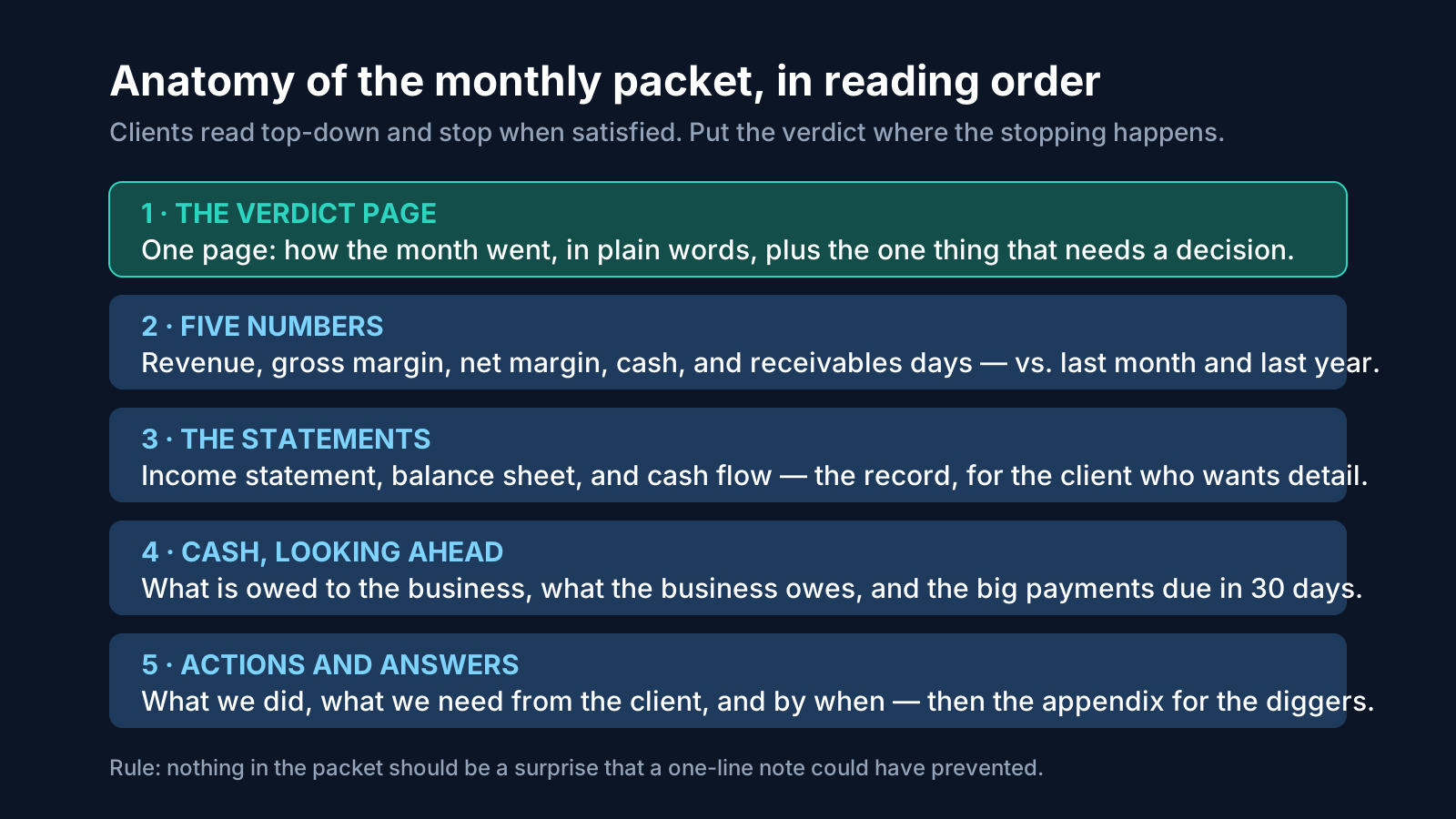
Page 1: the verdict
One page, three short blocks, plain words.
- How the month went. Two or three sentences. Not "revenue increased" but "September was your best revenue month this year, and profit still fell, because labor ran hot on two jobs." The verdict takes a position. A verdict page that only lists neutral facts is a table of contents wearing a costume.
- What changed and why. The two or three movements that matter, each with its cause as far as the books can tell it. If the cause is not in the books — a lost customer, a price change the owner has not mentioned — say what the books show and ask. Asking is a feature: it starts the conversation the call is for.
- The one decision. Most months there is exactly one thing that genuinely needs the owner: approve the hire, decide on the past-due customer, choose whether to draw on the line. Name it, give the numbers behind it, and give your recommendation. One decision, clearly owned, gets decided. Five get deferred.
Page 2: the five numbers
Five numbers, the same five every month, each shown for this month, last month, and the same month last year:
- Revenue. The top line, with the comparison doing the talking.
- Gross margin percent. The earliest warning light in most businesses; it moves before profit does and points at pricing, labor, or materials.
- Net margin percent. Profit as a share of revenue, so a growing business can tell growth from profitable growth.
- Cash. The actual bank position plus, if you track it, weeks of operating expenses it covers. Owners think in cash; meet them there.
- Receivables days. How many days of sales are sitting unpaid. This one number quietly manages collections behavior all year, because the owner watches it once you show it monthly.
Below the five, one short paragraph: the bridge. Revenue went up 8 percent and net margin still fell from 14.2 percent to 11.6 percent — where did the difference go? In the illustrative example running through this article, a small contractor we will call Harbor Lane Builders, the bridge reads: labor up $6,100 on overtime for two deadline jobs, subcontractor costs up $3,400 on a job that was bid before a materials increase, partly offset by $2,200 of fuel and vehicle savings. Three lines. That paragraph is the single most-read, most-quoted part of any packet we know of, because it converts three statements into one story.
Pages 3 to 5: the statements
Income statement (with the same comparisons as the five numbers), balance sheet, and a simple cash summary: opening cash, cash in, cash out by broad category, closing cash. These are the record. Some clients — the detail-minded owner, the one with a lender — will read them every month. Most will read them when the verdict page gives them a reason to. Either way they are present, consistent, and reconciled, which is the foundation everything else stands on.
The KPI page: five numbers are not enough for every business
The five numbers are the universal core. Around them, each client gets a small set of measures specific to how their business makes money — and small is the operative word. Intuit's guidance to accountants on client KPIs makes the same two-part point: track a mix of short-term measures for the current month and measures tied to long-term goals, and choose industry-specific measures rather than generic ones — a builder needs job costing and crew productivity, a law firm needs billable hours and collections, a retailer needs inventory turns. One practitioner quoted in that guidance estimates that accounting professionals who track KPIs for their clients earn 20 to 25 percent more; treat that as an experienced practitioner's estimate rather than survey data, but the direction matches the CAS benchmark's advisory premium.
Practical sets by industry, three to five each, no more:
- Contractors and trades: backlog in weeks, margin by job (best and worst), labor as a percent of revenue, change orders outstanding.
- Professional services: utilization, average realized rate, work in progress aging, collections against billings.
- Retail and e-commerce: inventory turns, margin by category, return rate, average order value.
- Restaurants: food cost percent, labor percent, sales per labor hour, covers trend.
- Any business with recurring revenue: churn, revenue per customer, the concentration of the top five customers.
Pick the set with the client in the first quarterly review, write the definitions down in the packet appendix, and do not change the set casually. A KPI that changes definition every quarter measures your reporting, not their business.
The cash lookahead: the page that prevents the phone call you dread
Profit is an opinion about a period; cash is a fact about next Tuesday. Nearly 3 in 10 failed startups in CB Insights' post-mortem analysis ran out of cash, and the pattern in established small businesses is the same story at a slower speed: the failure is rarely a business that was never profitable, it is a profitable business that met a payroll it could not cover. The packet's forward-looking cash page is the cheapest insurance a firm sells:
- Receivables position: who owes the business money, how much is past due, and the two or three names that matter. Context from Xero's Small Business Insights for the U.S. (September quarter 2024): small businesses waited an average of 28.7 days to be paid and were paid an average of 9.1 days late. Your client's number, printed next to that world, starts better collections conversations than any lecture.
- Known outflows in the next 30 days: payroll dates and amounts, rent, loan payments, estimated tax dates, the annual insurance premium that surprises someone every year. Nothing on this list should ever be a surprise; writing it down monthly means it never is.
- The gap, if there is one: if the lookahead shows a tight week, say so now, with options — collect the two past-due invoices, time the equipment purchase a month later, draw the line deliberately rather than accidentally. A gap surfaced 30 days out is a planning item. Surfaced on the day, it is a crisis and a story about your firm the client tells at exactly the wrong moments.
The closing page: actions and answers
End with three short lists: what we completed this month (the invisible work, made visible — reconciliations done, the audit notice answered, the sales tax filing), what we need from the client (two items maximum, each with a date), and what is already scheduled next month. This page does quiet retention work: over a year it becomes a written record of a firm that does what it says, which is the substance underneath every renewal conversation.
When to send it: the cadence is the product
A packet's contents earn the fee; its timing earns the trust. The working standard that fits a monthly close:
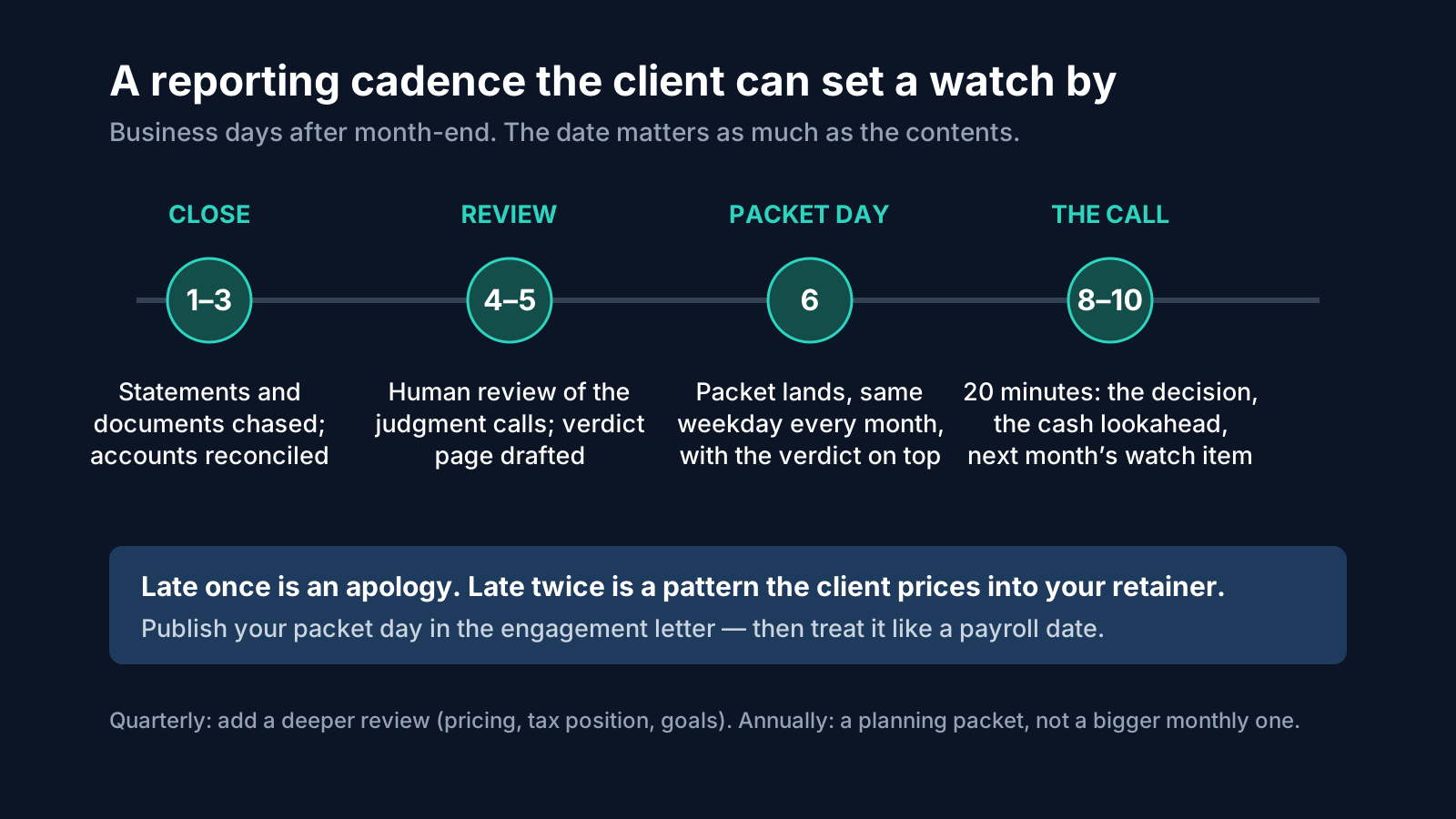
- Business days 1 to 3 — close. Statements and documents chased, transactions coded, every account reconciled. Nothing in the packet is written from unreconciled books; a fast wrong report is worse than a slower right one, and this window is where the discipline lives.
- Business days 4 to 5 — review. A human reviews the judgment calls, reads the draft verdict page against the statements, and checks the one decision is really the one decision. This is the step that separates a packet from a data export.
- Business day 6 — packet day. The packet lands, on the same weekday rhythm every month, named in the engagement letter like a payroll date. If a delay is ever unavoidable, the client hears about it before packet day, not after — a one-line note on day 4 ("waiting on your September statement; packet lands Thursday instead of Tuesday") protects the pattern even when the date slips.
- Business days 8 to 10 — the call. Twenty minutes, standing agenda: the decision from page one, the cash lookahead, next month's watch item. Short because the packet did the reporting; the call is for judgment, which Karbon's clients explicitly say is the part they value and cannot automate away.
Quarterly, add one deeper review: pricing, tax position, progress against the goals the KPIs track. Annually, a planning packet. Do not let the monthly packet bloat into the quarterly one — a monthly packet that tries to say everything gets read like it says nothing.
A note on lateness. Clients forgive a late packet the way they forgive a late payroll: once, with an explanation, and never quite fully. The firms that hold packet day treat it as a production deadline with the same seriousness as a filing deadline, because commercially it is one — it is the deadline the client actually notices.
The worked example: what six days of collections is worth
Reporting earns its keep when it changes a number. Take Harbor Lane Builders, our illustrative contractor: $486,000 of annual revenue, healthy margins, and a chronic cash squeeze its owner blamed on growth. The packet's receivables-days line told the real story across three months: 41 days, 44 days, 47 days. Customers were paying later every month while revenue grew — growth financed by the owner's bank account.
The arithmetic of fixing it is simple enough to print in the packet, which is the point. Annual revenue divided by 365 gives daily sales: about $1,332 a day for Harbor Lane. Every day shaved off collection time frees that much cash, once, and keeps it freed:
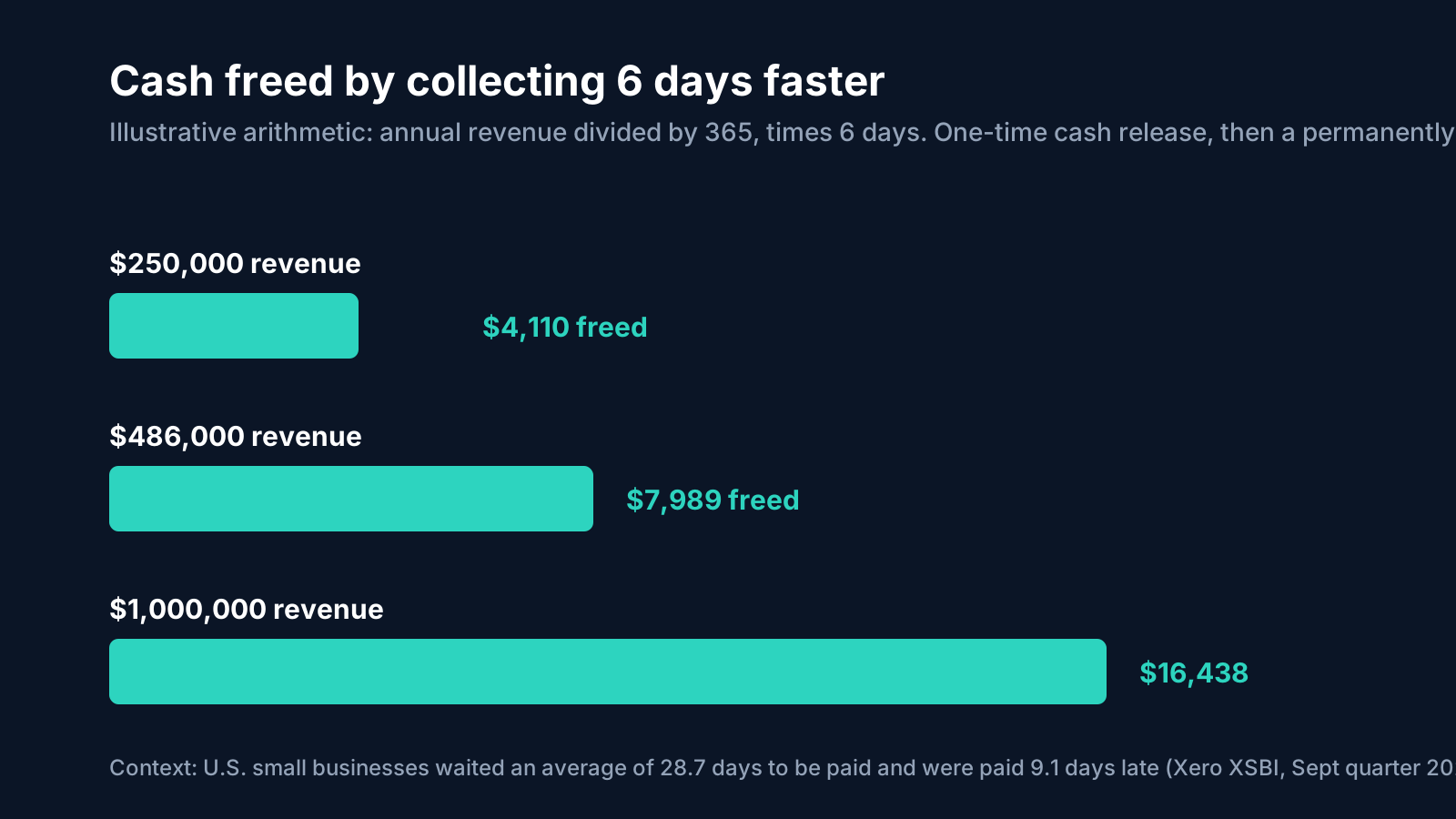
At six days faster — from 47 to 41, merely back to where the client started the quarter — about $7,989 of cash comes home. At the Xero benchmark wait of roughly 29 days, the same client would hold about $24,000 less in receivables than at 47 days. None of this requires new sales, a loan, or a price increase. It requires the owner to see one number monthly, watch it drift, and make two phone calls in the month the packet flags it — which is what happened, in this composite example, when the packet named the two past-due accounts on the cash page instead of burying them in an aging report nobody opened.
Now run the same logic on the retainer itself. At $349 a month, Harbor Lane's firm charges $4,188 a year. The collections improvement alone — one insight, surfaced by one line of one packet — released roughly twice that in cash, permanently. That is the sentence a client repeats to themselves at renewal time, and it only exists if the reporting surfaced it. Firms do not lose retainers because the books were wrong. They lose them because, in twelve months of statements, nothing ever visibly changed for the better — and a service that never visibly changes anything is a price waiting to be negotiated.
Tiering the reporting: depth scales, accuracy does not
Not every client buys the full packet, and the reporting layer is the cleanest place to differentiate packages — cleaner than differentiating the books themselves, which should never be tiered. Every client, at every price, gets accurate, reconciled statements on the promised day. What scales is depth, speed, and conversation:
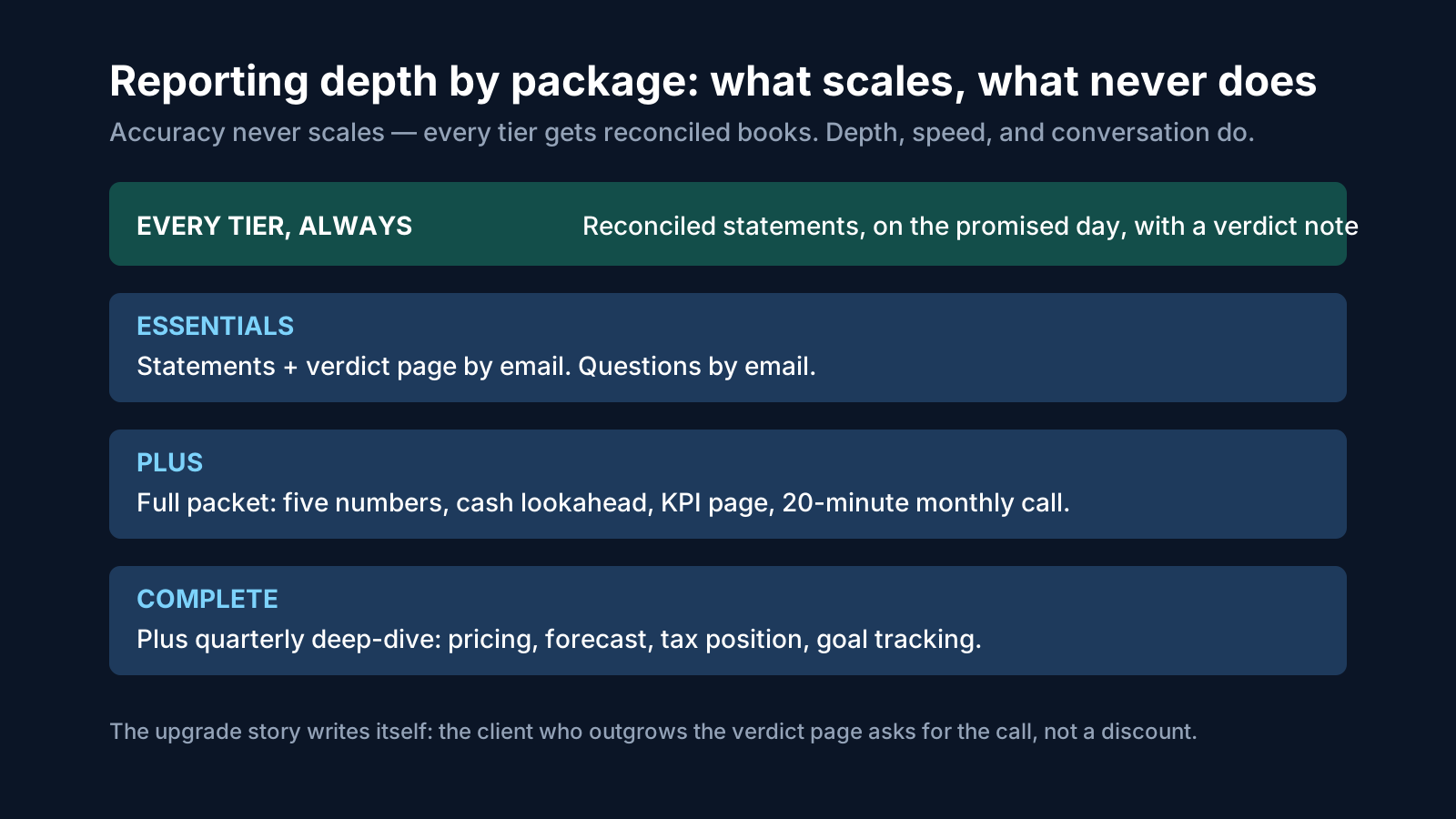
- Essentials gets the statements and a short verdict note by email — three or four sentences, the month's headline and one watch item. Even the entry tier reports a verdict, because the verdict is what teaches the client the reporting is worth reading, and it is the top of the upgrade path.
- Plus gets the full packet — verdict page, five numbers, statements, industry KPIs, cash lookahead, actions page — plus the 20-minute monthly call. This is the tier the firm's economics should be built around, and the packet is its showcase.
- Complete adds the quarterly deep-dive: pricing review, forecast, tax position, goal tracking, and a longer working session. The quarterly layer is where the CAS benchmark's advisory premium lives; the monthly packet is what makes the client ready to buy it, because they have already seen monthly what your judgment does to their numbers.
Notice what this does to upgrade conversations. The Essentials client who starts asking questions the verdict note cannot answer is not being sold to; they are describing the Plus packet. The Plus client whose quarterly questions keep arriving monthly is describing Complete. Reporting tiers turn upsells into requests, which is the only kind of upsell that survives contact with a renewal date.
Producing the packet without eating the margin
The honest objection to everything above is time. A bespoke packet per client, hand-built monthly, will consume the margin it is meant to defend. The packets that survive are produced like the close itself: templated, checklist-driven, and written from the same structure every month.
- One template, every client. Same pages, same order, same five numbers, same fonts. The only bespoke parts are the verdict sentences, the bridge paragraph, the KPI set, and the decision. Standardizing the container is what makes the judgment inside it affordable — and consistency across months is itself a feature for the client, who learns where everything lives.
- Write the verdict from a checklist of questions, not from a blank page: What moved? Why? What is drifting? What is owed, and by whom? What is due in 30 days? What needs the owner? Six prompts, answered in order, draft the packet.
- Separate production from review. The person (or system) that assembles the statements and numbers should not be the only eyes on the verdict page. A short review pass — figures agreed to the statements, comparisons recomputed, the decision sanity-checked — is the quality gate, and it is minutes, not hours, once the template exists.
- Put the packet on the close calendar, with an owner and a deadline like every other close task. A packet produced "when there's time" is a packet that skips the busy months, which are precisely the months the client most needs it.
- Measure your own production time for the first quarter and price the tiers from the real number. In most firms that template this properly, the full Plus packet lands at well under an hour of production plus the review and the call — a cost the tier's price covers comfortably, and a fraction of the meeting time firms used to spend explaining raw statements to confused owners.
This is also where the underlying bookkeeping system decides whether the cadence is even possible. A packet on business day 6 requires books that are finished on day 3, which requires coding and reconciliation that do not wait for a human to open a screen. In LedgerHQ, Tally codes the bank activity, works the reconciliations from the stored statement, follows up on what is missing, and prepares the financials — and its monthly financial review already assembles revenue, expenses, cash, margins, vendors, trends, and the financial statements in one review that is ready to share. That is the raw packet, built from the books Tally just finished, with the income statement and balance sheet attached. The firm's job — the part clients told Karbon they value — is the verdict, the bridge, and the decision on top of it. The software gets the packet out on day 6; the bookkeeper is why it is worth reading. LedgerHQ costs $20 a month per company with Tally's work included, and it is free until January 1, 2027, so the production economics above are not a software-budget conversation.
Five mistakes that quietly destroy the packet's value
- Leading with the statements. Covered above, and still the most common. If page one is an income statement, you have sent homework, not a report.
- Reporting everything. A 30-page packet signals effort and delivers none of the value of a 6-page one, because the client cannot find the two things that matter. Move depth to the appendix and the quarterly review. If a number has not changed a decision or a conversation in six months, cut it.
- No memory. Every packet should close last month's open items before opening new ones — the decision the client made, the invoice that was going to get collected, the watch item you flagged. A report with no memory teaches the client that nothing in it has consequences, so they stop reading it as if it does.
- Surprises. A tax bill, a covenant breach, a cash gap that the packet reveals after the fact is a small betrayal, however accurate the numbers are. The lookahead page exists precisely so that bad news always arrives early, from you, with options attached.
- Inconsistency. Changing the KPI set, the layout, or the delivery day every few months resets the client's learning each time. Boring consistency is the strategy. The packet should be the most predictable thing in the client's month.
How to know the reporting is working
Judge the packet by the client's behavior, not by your effort:
- Replies and forwards. Clients who reply to the packet, ask about a line, or forward it to a partner or lender are telling you it landed. Silence across a whole client base, month after month, is data too.
- Decisions made on the call. Count them quarterly. A packet that produces a decision most months is functioning; one that produces small talk is a newsletter.
- Questions migrating upward. When client questions move from "what is this expense" to "should we hire in March or May," the reporting has done its real job — and the advisory conversation has already started.
- Retention and tier movement. Track renewal rate and upgrades by whether clients receive the full packet. Most firms that look find the pattern obvious in hindsight: the clients who see a verdict monthly stay, expand, and refer; the ones who get statements drift to whoever is cheaper, because on paper, statements are all anyone is selling them.
Frequently asked questions
How long should a monthly client report be? Short enough to read in under ten minutes: typically five to seven pages — verdict page, five numbers, the statements, an industry KPI page, a cash lookahead, and an actions page — plus an appendix for the clients who want detail. If it takes longer to read than the call takes to discuss, it is too long.
What should a bookkeeper include in a monthly financial package? A one-page verdict in plain words, five tracked numbers with comparisons (revenue, gross margin, net margin, cash, receivables days), the income statement and balance sheet, a small set of industry-specific KPIs, a forward-looking cash page covering receivables and the next 30 days of outflows, and a closing page of completed work, requests, and next steps.
When should the monthly report go out? On a fixed day the client can plan around — business day 6 after month-end is a workable standard for a monthly close, with the review call a few days later. The specific day matters less than its consistency: name it in the engagement letter and treat it like a filing deadline.
Do clients actually read financial reports? They read reports that are written for them: verdict first, comparisons always, jargon translated, one decision named. Karbon's 2026 survey of 350 U.S. business owners found trust is the top reason clients choose an accountant and that clients prize judgment and business knowledge — a packet built on those lines gets read because it is the judgment, delivered monthly. Raw statement dumps, by contrast, are filed unread by most owners, which is a reporting-design problem, not a client problem.
Can monthly reporting really justify a higher retainer? The benchmark evidence says insight is where the premium sits: in the 2024 CPA.com and AICPA CAS Benchmark Survey, firms with significant CFO and business-insights revenue earned more than 30 percent higher monthly recurring revenue, and median net client fees per professional rose 29 percent between the 2022 and 2024 surveys. A consistent monthly packet is the entry-level form of that insight layer, and it is what moves a bookkeeping client toward it.
Should reporting differ by package tier? Yes — in depth, speed, and conversation, never in accuracy. Entry tiers get statements plus a short verdict note; the core tier gets the full packet and a monthly call; the top tier adds a quarterly deep-dive on pricing, forecast, and tax position. Every tier gets reconciled books delivered on the promised day.
Sources
- CPA.com and AICPA PCPS, Client Advisory Services Benchmark Survey 2024 (released December 9, 2024): median CAS growth of 17 percent, projected three-year growth of 99 percent, median net client fees per professional of $156,250 (up 29 percent), CFO and business-insights firms earning more than 30 percent higher monthly recurring revenue, median typical monthly CAS fee of $3,000. https://www.cpa.com/news/aicpa-and-cpacom-benchmark-survey-client-advisory-services-cas-practices-report-17-growth?utm_source=social&utm_medium=dec+9&utm_campaign=cas&utm_id=bmrelease
- Karbon, The Future of Client Trust in the Age of AI (July 27, 2026): survey of 350 U.S. business owners; profession Net Promoter Score of +49; 84 percent rating their accountant 8 or higher out of 10; trust the top selection reason at 39 percent. https://www.globenewswire.com/news-release/2026/07/27/3333774/0/en/karbon-report-finds-ai-raises-the-standard-for-client-relationships-in-accounting.html
- CB Insights, startup post-mortem analysis (nearly 3 in 10 failed startups ran out of cash), as reported October 13, 2026. https://www.abnewswire.com/pressreleases/most-startups-dont-track-burn-rate-correctly-k38-consulting-finds_841425.html
- Xero, Small Business Insights, United States, September quarter 2024 (released February 2025): average time to be paid of 28.7 days; payments an average of 9.1 days late. https://smallbiztrends.com/xero-report-positive-sales-growth-small-business-q4-2024/
- Intuit QuickBooks, Tax Pro Center, "Be a Trusted Advisor: Track Client KPIs" — short-term and long-term KPI mix, industry-specific measures, and a practitioner estimate that professionals who track client KPIs earn 20 to 25 percent more. https://accountants.intuit.com/taxprocenter/client-relationships/be-a-trusted-advisor-simple-ways-to-start-tracking-your-clients-kpis/
- LedgerHQ product and pricing, verified on ledgerhq.ai on October 14, 2026: Tally codes transactions, works reconciliations, follows up for missing information, and prepares financials; the monthly financial review assembles revenue, expenses, cash, margins, vendors, trends, and the financial statements in one review ready to share; $20 per month per company, free until January 1, 2027.
Harbor Lane Builders is an illustrative composite used for the worked examples; its figures are the author's own arithmetic, labeled as such, and do not describe a specific LedgerHQ customer.