One Workspace, Separate Books
Move across the firm without opening a separate product, and without any company's records touching another's.
 LedgerHQ
For accounting firms and bookkeepers
Tally handles routine bookkeeping across every company. Your team reviews exceptions and keeps each set of books moving.
One Firm Workspace · Separate Company Books · Tally IncludedOne Tally, Every Company
She works the whole book of business.
0/8
Books current
12 items waiting
1 items waiting
7 items waiting
4 items waiting
6 items waiting
9 items waiting
5 items waiting
3 items waiting
Move across the firm without opening a separate product, and without any company's records touching another's.
Routine coding, research, cleanup, and follow-up stop consuming the whole day, so growth is not a hiring plan.
Moving is easy and the history comes with you. Start with one company if you want proof first — most firms do, once.
See it end to end
Companies, bank activity, coding, reconciliation, and reports — the way a firm actually moves through a month.
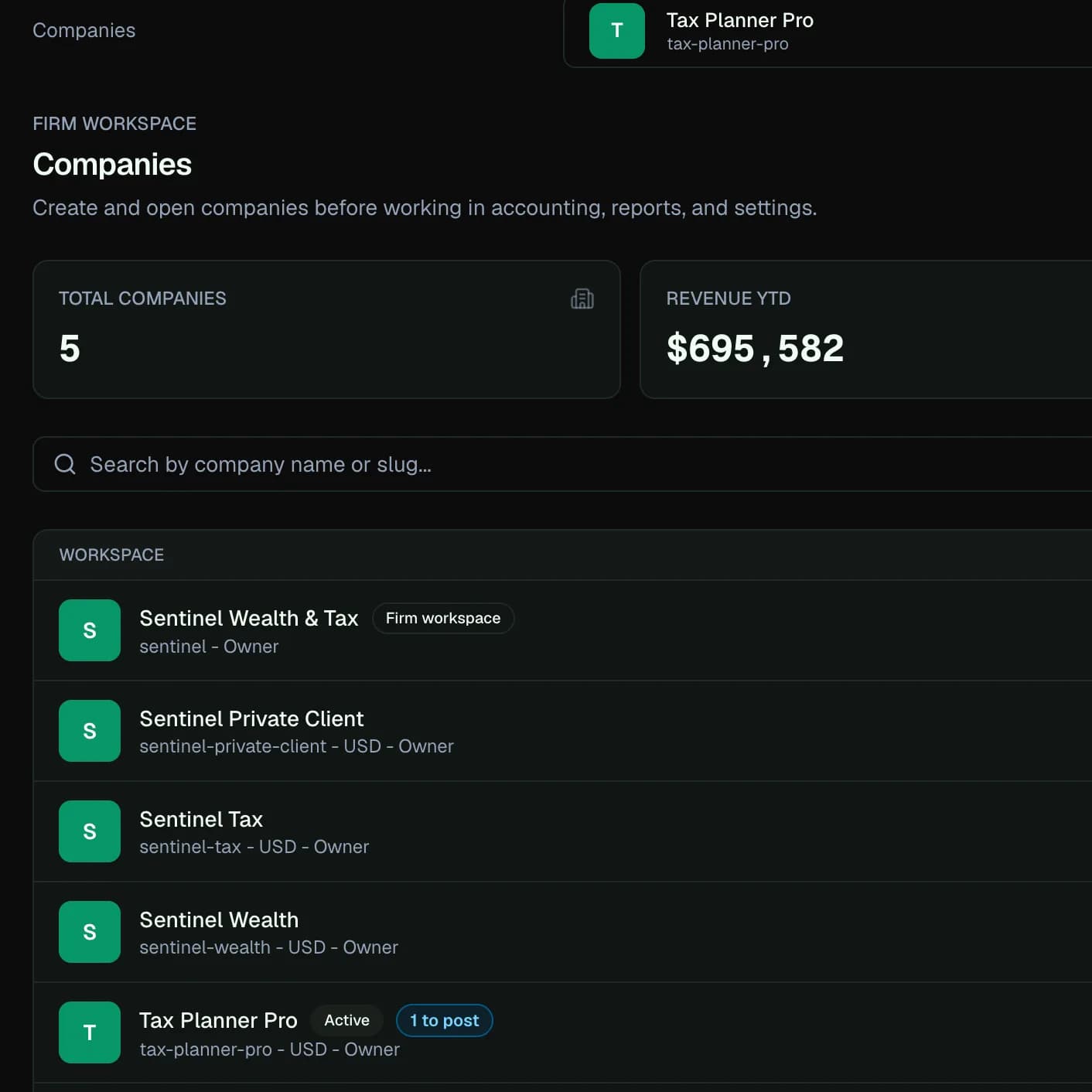
The Firm View
One screen shows which companies have uncoded activity, missing statements, unfinished reconciliations, open questions, or reports ready to send.
Your agents work here too
A documented REST API and an MCP server ship with the product. Point the agent you already run at your books — same permissions, full audit trail, nothing held back for a partner tier.
LedgerHQ on iPhone
Not a cut-down companion app. Ask Tally what needs doing across every company, open a company’s workspace, code transactions, pull statements and reports, and answer requests — from your phone.
Company owners get their own view: their accounts, their reports, and the questions you asked them. They never see your firm workspace.
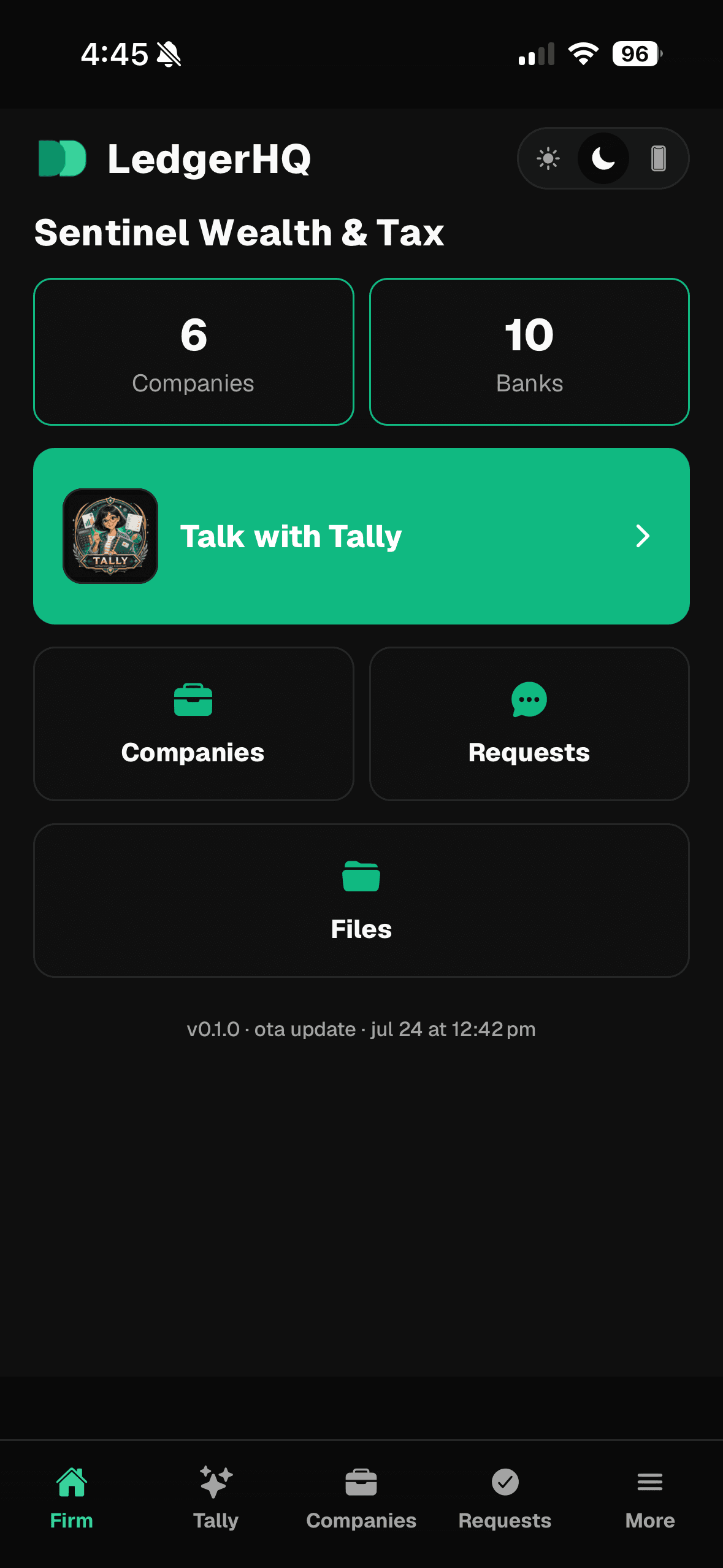
Your firm
Your whole firm, opened from your pocket.
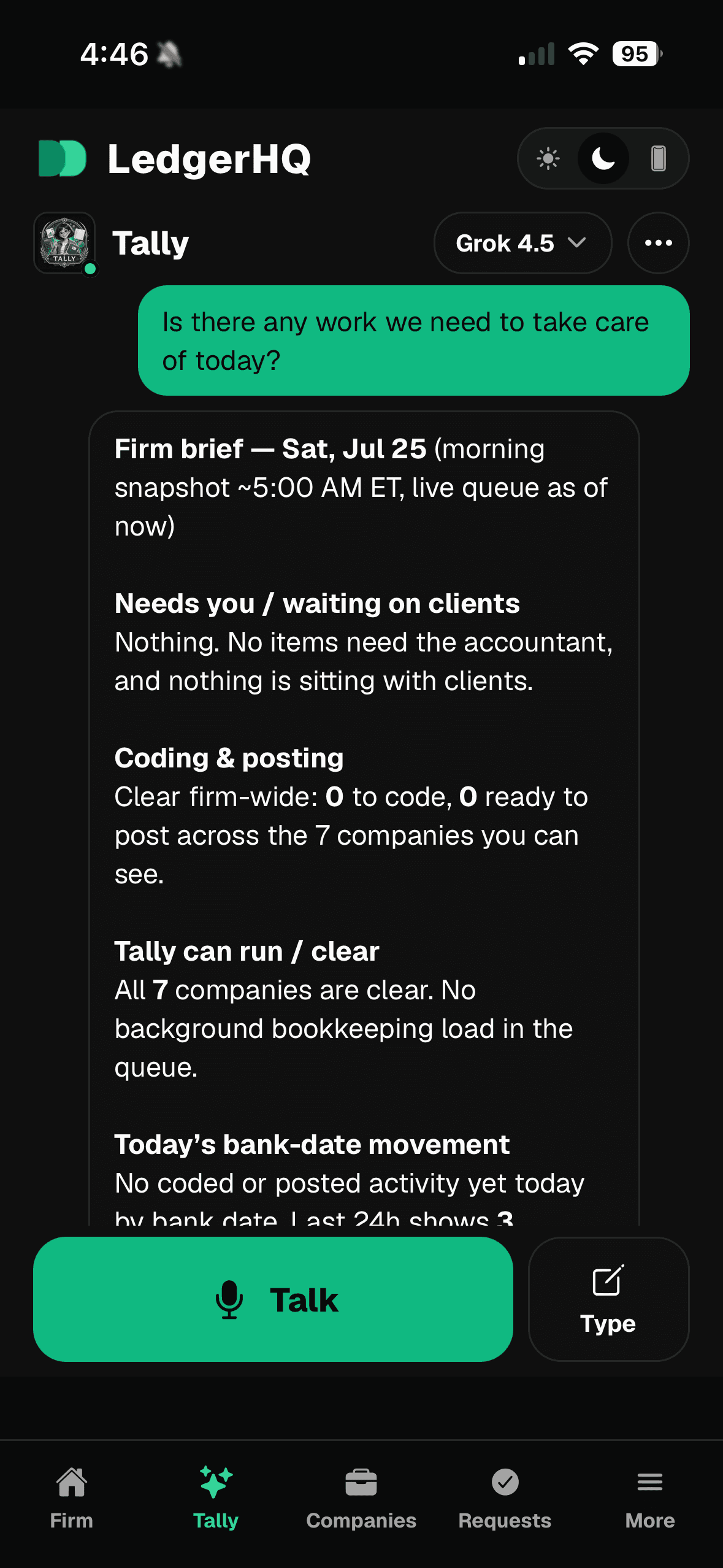
Your firm
Ask Tally what needs doing. Out loud, if you want.
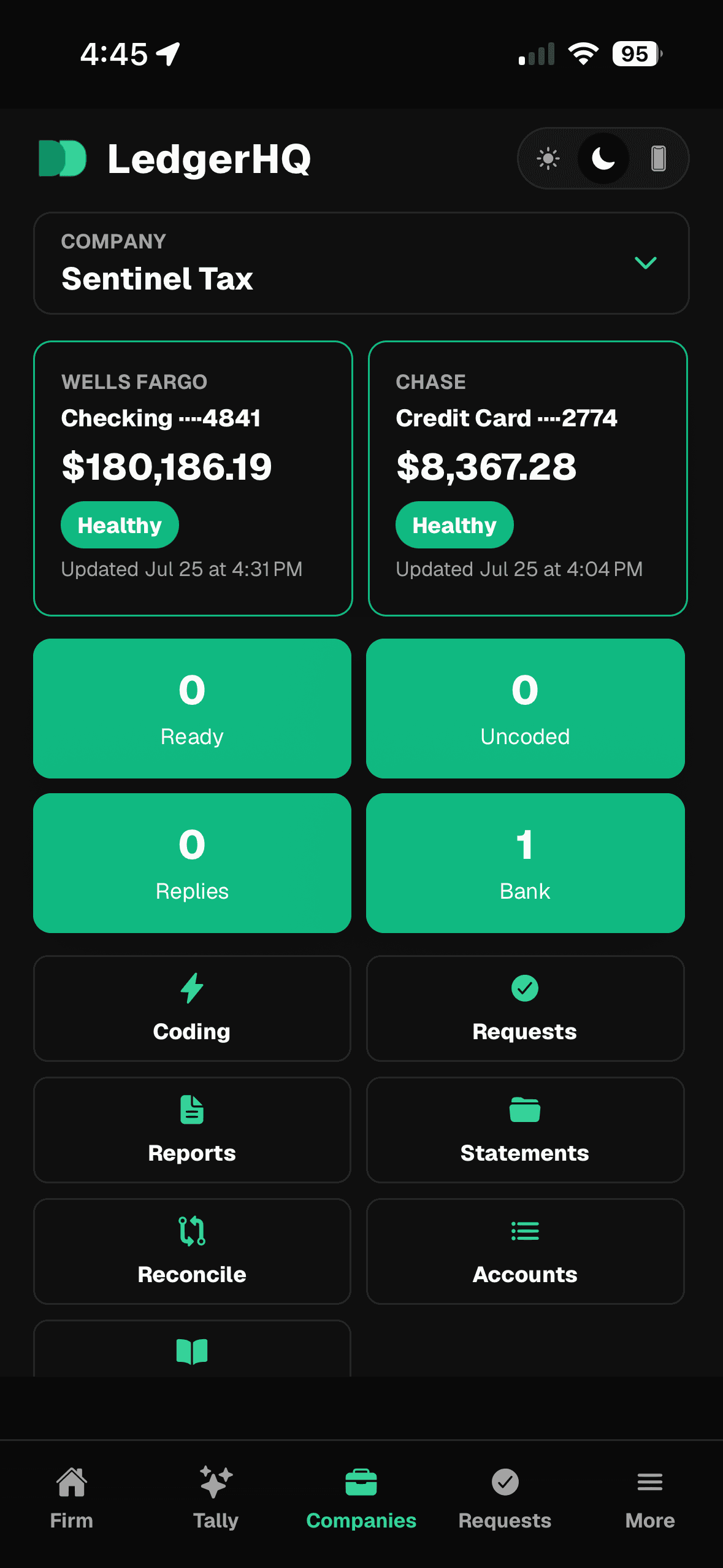
Your firm
Pick a company and go straight to the work.
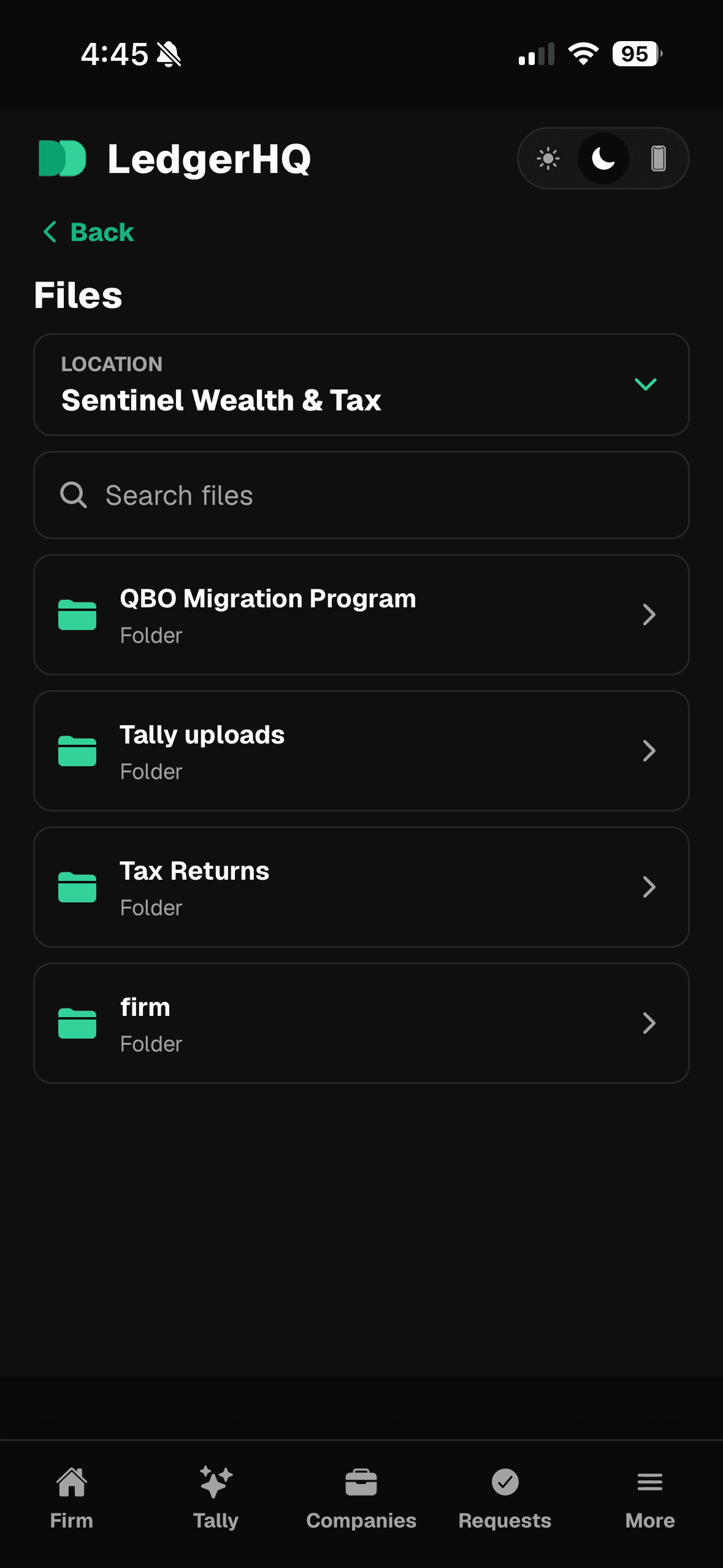
Your firm
Statements and workpapers, wherever you are.
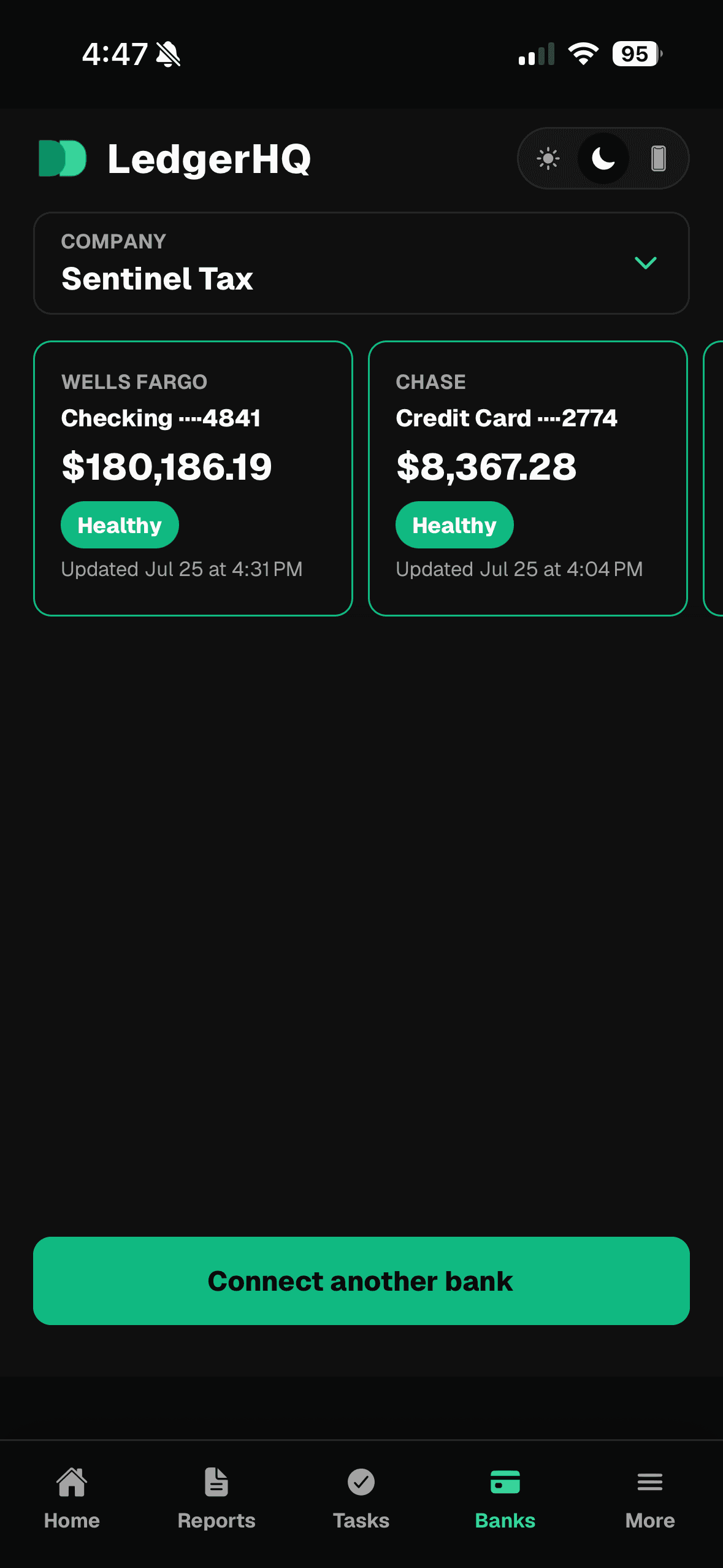
Your client
Your client sees their accounts, not your workspace.
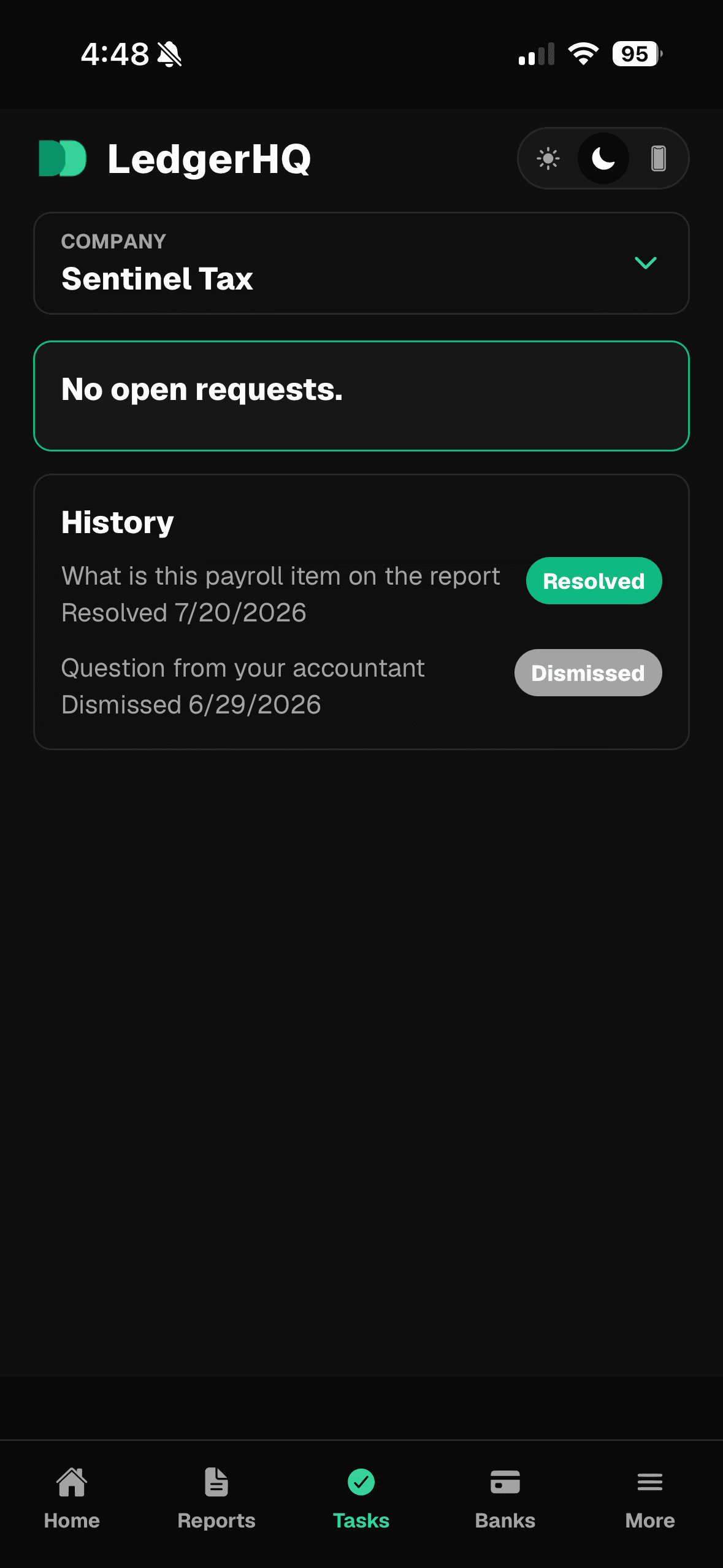
Your client
And answers your questions without an email thread.
How It Works
Tally handles the repeatable work. Your team starts where judgment matters.
LedgerHQ is one product. The ledger, Tally, the bank feeds, the reconciliation, and the reports are the same software at the same price per company, whether the books belong to a business owner keeping their own or to a company your firm manages. There is no firm surcharge and nothing held back from the cheaper door.
Firm capacity comes down to transactions per bookkeeper per month. Any tool that still needs a person to confirm every row caps that number, which is why adding companies has always meant adding payroll.
Bank activity, posting, statements, reconciliation, and reporting live in one system, so work moves as information arrives rather than waiting for a month-end cleanup sprint.
The Difference
Compare the daily work before and after Tally joins the firm.
Questions, Answered
For a firm managing books for many companies, the right software is firm-first: one workspace across every company, separate ledgers underneath, and automation that does the routine work rather than suggesting it. LedgerHQ Pro is built for that pattern.
Same software, same price. Pro adds the firm workspace: managed companies, company-owner access and requests, staff seats, and firm-wide views such as the cross-company coding queue.
Move one company first if you want proof, then bring the rest. Export the chart of accounts and journal CSVs, check the preview before anything posts, and reconnect the bank accounts through Plaid.
No. Move one company first, review the result, and bring the rest when you are ready.
Only $20 per month
Bring every company. Tally's AI use is included.
Start Free